Objective:
To help people understand what benzodiazepine withdrawal symptoms actually feel like, why they are medically serious, and how programs like Intrepid Recovery use professional benzo addiction treatment to help people get through them safely.
Key Takeaways:
- Benzo withdrawal affects the body and mind at the same time
- Stopping benzos without medical help can cause seizures, it is not just uncomfortable, it is dangerous
- Symptoms vary a lot from person to person based on dose, duration, and mental health history
- Benzo addiction treatment uses tapering, therapy, and 24/7 monitoring to reduce risk
- Recovery does not end after detox, aftercare and coping skills matter just as much
Why Benzodiazepine Addiction Often Requires Professional Treatment
What Benzodiazepines Are and How Dependence Develops
Benzos are prescription drugs. Doctors prescribe them for anxiety, panic attacks, seizures, and trouble sleeping. Common ones include Xanax, Valium, Klonopin, and Ativan.
Common Prescription Benzodiazepines
- Xanax (alprazolam)
- Valium (diazepam)
- Klonopin (clonazepam)
- Ativan (lorazepam)
- Restoril (temazepam)
They calm the nervous system by boosting a brain chemical called GABA. In the short term, they work well. Over time, the brain can adapt to the presence of benzodiazepines. When the medication is reduced too quickly, the nervous system may become overactive, which can lead to withdrawal symptoms such as anxiety, insomnia, tremors, and, in serious cases, seizures. Within weeks to months, the person needs benzos to feel normal, not high, just functional. That is physical dependence, and it can happen even when someone follows their prescription exactly.
How Long-Term Use Changes Brain Chemistry
The longer someone uses benzos, the more the brain suppresses its own GABA production. When the drug is removed, the brain is suddenly understimulated on the calming side and overwhelmed on the excitatory side. Withdrawal can affect several body systems, including muscles, nerves, digestion, sleep, and mood.
Why Stopping Benzodiazepines Suddenly Can Be Dangerous
Benzo withdrawal is one of a small number of drug withdrawals that can be fatal. Seizures can happen with no warning. In severe cases, benzodiazepine withdrawal may involve confusion, hallucinations, or serious psychological distress, especially when use has been heavy or long-term. This is not rare in heavy, long-term users. It is a documented medical risk, which is why cold-turkey benzo withdrawal is considered clinically dangerous.
Why Professional Treatment Improves Safety and Recovery Outcomes
For high-risk individuals, professional treatment can reduce medical danger by providing monitoring, gradual tapering, and timely clinical support. A medical team can recognize dangerous patterns early, adjust the tapering schedule, and step in before symptoms escalate into emergencies.
Understanding Benzodiazepine Withdrawal and Recovery Symptoms
Why Symptoms Can Differ From Person to Person
No two people withdraw the same way. Three factors drive most of the difference.
Dosage and Length of Use
Someone who took a high dose every day for five years has a much deeper physical dependence than someone who used a low dose for six months. Greater dependence means longer, more intense withdrawal.
Type of Benzodiazepine Used
Short-acting benzos like Xanax hit fast and leave fast, withdrawal starts within hours. Long-acting ones like Valium take days to clear, which delays the onset but stretches withdrawal out over a longer period.
Co-Occurring Mental Health Conditions
People with untreated anxiety, depression, or PTSD often experience more intense and complicated withdrawal. Their baseline mental health is already fragile, and withdrawal stress pushes it further.
The Difference Between Withdrawal Symptoms and Underlying Conditions Returning
This is a critical distinction that treatment centers are trained to catch. When someone stops benzos and feels anxious again, that anxiety might be withdrawal, or it might be the original anxiety disorder returning now that the medication is gone. Misreading this leads to poor treatment decisions. A proper assessment identifies what is happening.
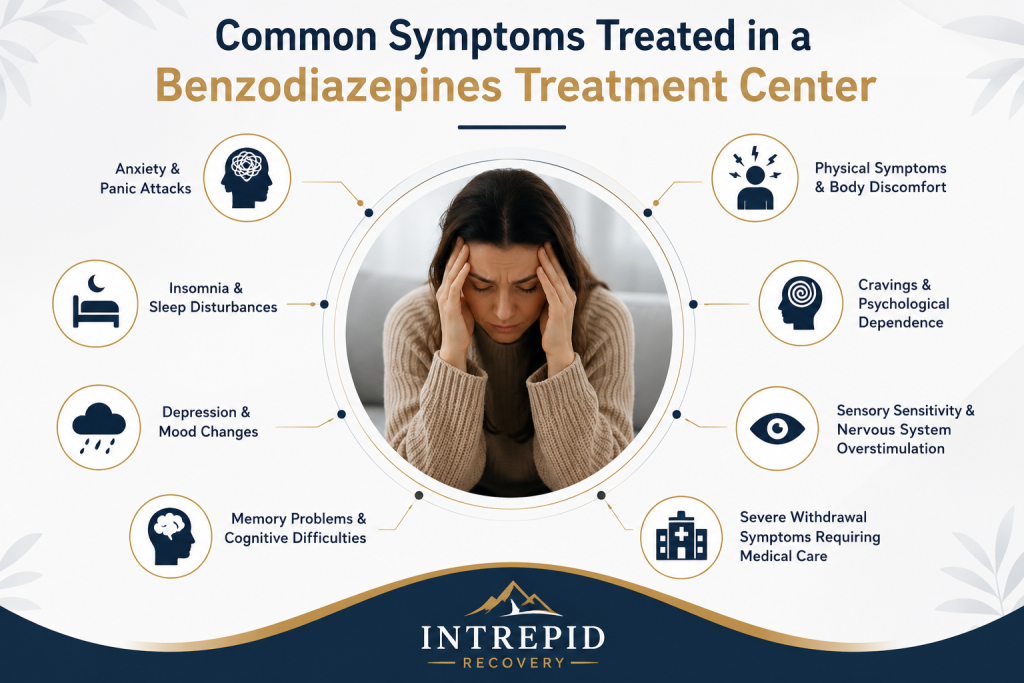
1. Anxiety and Panic Symptoms
Why Anxiety Often Increases During Withdrawal
When benzos are removed, the nervous system overcorrects. It has been suppressed for so long that when the suppression lifts, it fires excessively. The result is rebound anxiety, often worse than the anxiety the person started the medication for in the first place.
Panic Attacks and Emotional Distress
Panic attacks during acute benzo withdrawal are common. Heart racing, chest tight, unable to breathe properly, convinced something terrible is about to happen, these happen to people who never had panic attacks before starting benzos.
How Treatment Centers Help Manage Anxiety Safely
Therapy and Emotional Support
Grounding techniques and CBT give people something to reach for when anxiety peaks. These tools reduce the intensity and duration of acute episodes.
Medication Management During Detox
Doctors can prescribe non-addictive medications that take the edge off severe anxiety while the brain stabilizes. This is done carefully and adjusted throughout detox.
2. Insomnia and Sleep Disturbances
Why Benzodiazepine Withdrawal Disrupts Sleep
Many people took benzos specifically to sleep. The brain no longer knows how to initiate sleep on its own. Getting that back takes time and structured support.
Common Sleep Problems During Recovery
Trouble Falling Asleep
The nervous system stays heightened at night. The body is physically exhausted but cannot wind down.
Nightmares and Interrupted Sleep
When sleep does come, it is often broken by vivid, disturbing dreams. This pattern is consistently reported during benzodiazepine withdrawal symptoms and can last several weeks.
Treatment Approaches for Better Sleep Recovery
Consistent daily schedules, sleep hygiene education, and relaxation techniques gradually help the brain reclaim its natural sleep rhythm.
3. Depression and Mood Changes
Why Emotional Instability Is Common During Withdrawal
GABA plays a role in mood stability, not just anxiety. When it drops suddenly, the mood takes a hit. This is not a psychological response to a stressful situation, it is a direct neurological consequence of withdrawal.
Feelings of Hopelessness, Irritability, and Low Motivation
Emotional flatness is one of the hardest benzodiazepine withdrawal symptoms to sit with. Some people feel nothing at all. Others feel irritable without knowing why. Both are normal within the withdrawal picture.
Mental Health Support in a Benzodiazepine Treatment Center
Individual therapy, psychiatric evaluation, and group support all address mood directly. Antidepressants are sometimes considered when depression persists beyond acute withdrawal.
4. Physical Symptoms and Body Discomfort
Muscle Pain, Tension, and Tremors
Some people experience muscle tightness, tremors, restlessness, or general physical discomfort during withdrawal. This is the nervous system running hot without its chemical brake.
Headaches, Sweating, and Fatigue
Headaches and night sweats tend to appear early and resolve within the first week or two. Fatigue lingers longer, a combination of poor sleep and the physical toll of withdrawal.
Nausea, Dizziness, and Digestive Problems
The gut and the nervous system are closely connected. Many people do not realize the dangers of mixing benzos and alcohol, especially during withdrawal and recovery. Nausea, cramping, appetite loss, and dizziness are all common in the first week of benzodiazepine withdrawal, particularly in people coming off higher doses.
How Medical Detox Helps Stabilize Physical Symptoms
IV hydration, nutritional support, and targeted medications help stabilize the body while it adjusts. Medical staff watch vitals and catch complications before they worsen.
5. Memory Problems and Cognitive Difficulties
Brain Fog and Trouble Concentrating
Many people describe withdrawal-related brain fog as slow thinking, poor focus, or difficulty following conversations. It is one of the more disorienting withdrawal effects.
Short-Term Memory Challenges
Short-term memory is hit hardest. Forgetting what was said moments ago, losing track mid-sentence, missing obvious things, these are all part of how benzodiazepine withdrawal affects cognition.
Cognitive Recovery During Treatment
Proper sleep, structured activity, and nutrition all support brain recovery. Most people see real improvement within a few weeks of stabilizing.
6. Cravings and Psychological Dependence
Why Cravings Happen During Recovery
When withdrawal feels unbearable, the pull to take a benzo is powerful. This is memory and biology working together, the brain associates the drug with relief, and it wants relief.
Emotional Triggers Linked to Benzodiazepine Use
Stress, conflict, loneliness, and boredom are the most common triggers. People who used benzos to manage those feelings now face them without any buffer.
Coping Strategies Taught in Treatment Programs
Benzo addiction treatment builds real tools, distress tolerance, mindfulness, honest emotional processing, that replace the role benzos played. These take practice, but they work.
7. Sensory Sensitivity and Nervous System Overstimulation
Light, Noise, and Touch Sensitivity
Without the dampening effect of benzos, sensory input arrives unfiltered. Some people become more sensitive to light, sound, or touch during withdrawal. Ordinary noise becomes unbearable. Physical contact can feel wrong. This is not psychological sensitivity, it is the nervous system doing too much.
Feeling Overwhelmed or Hyperalert
Many people describe being permanently braced for something bad during withdrawal. On edge, scanning everything, unable to relax. It is exhausting to maintain that state hour after hour.
How Treatment Centers Create Safe, Calm Recovery Environments
Quiet spaces, low stimulation, and predictable schedules give the nervous system a chance to settle. Intrepid Recovery designs its environment around this need, because the space where someone recovers is part of the clinical care itself.
8. Severe Withdrawal Symptoms That May Need Immediate Medical Care
Seizures and Neurological Risks
This is the reason unsupervised benzo withdrawal is dangerous. Seizures can occur suddenly, no warning, and they are more likely with long-term, high-dose use. Medical supervision is strongly recommended for people with long-term use, high-dose use, previous withdrawal complications, seizure history, or significant mental health concerns.
Hallucinations and Severe Confusion
At peak withdrawal, some people see or hear things that are not there. Severe confusion and disorientation can accompany this. Without clinical staff present, this is genuinely frightening and potentially dangerous.
Intense Panic or Psychological Distress
Depersonalization, feeling detached from your own body or like reality is not real, can occur at peak withdrawal. It resolves, but not quickly or without support.
Why 24/7 Medical Monitoring Can Be Critical
The dangerous symptoms of benzo withdrawal can appear suddenly. Around-the-clock monitoring means someone is always there to respond before a complication becomes a crisis.
How Benzodiazepine Treatment Centers Help Manage Symptoms Safely
Medically Supervised Detox Programs
Doctors and nurses manage the detox from start to finish. Vitals are monitored. Medications are adjusted. The goal is to monitor symptoms closely and adjust care when needed.
Gradual Tapering Strategies
A taper may take weeks or months, depending on the person’s dose, duration of use, symptoms, and health history. A responsible program adjusts the pace instead of forcing every patient through the same schedule. This is the medical standard for benzodiazepine addiction treatment because it prevents the sudden neurological shock that causes the most dangerous benzodiazepine withdrawal symptoms.
Individual and Group Therapy
One-on-one therapy works through what drives the dependence. Group sessions remind people they are not alone, and that others have gotten through this.
Dual Diagnosis Support for Mental Health Conditions
Anxiety, PTSD, and depression are treated at the same time as the addiction. Leaving them unaddressed is what causes most relapses after treatment ends.
Wellness and Stress Management Approaches
Exercise, sleep support, nutrition, and mindfulness are built into the program. They support nervous system recovery and provide healthy outlets people can rely on after discharge.
Why Long-Term Support Matters After Initial Treatment
Preventing Relapse During Recovery
The first weeks after leaving treatment are the highest-risk period. Familiar stress and environments bring old patterns back fast. Having structure in place during this period changes outcomes.
Building Healthy Coping Skills
The skills learned in benzodiazepine addiction treatment need repetition to become automatic. Aftercare provides people with continued practice and support to help them stick with it.
Ongoing Counseling and Aftercare Support
Regular therapy, check-ins, and peer support groups keep people accountable and give them a place to address problems before they become crises.
Signs It May Be Time to Seek Professional Benzodiazepine Treatment
Difficulty Stopping Use Alone
Trying to quit and not succeeding is not a weakness. It is the body telling someone that professional help is what it needs.
Worsening Mental or Physical Symptoms
Increasing anxiety, physical discomfort between doses, or emotional instability are clear signs that dependence has set in and is getting stronger.
Withdrawal Symptoms Between Doses
Feeling shaky, panicked, or physically unwell before the next dose is due is not normal. It means the body has become dependent, and the cycle is tightening.
Increased Dependence on Medication
When someone needs higher doses to feel the same effect or relies on benzos just to function through a normal day, it’s a clear sign that professional treatment is no longer optional, it’s necessary.
Final Thoughts
Get Safe Support for Benzodiazepine Withdrawal in Florida
Benzodiazepine withdrawal can become dangerous without proper medical care. Intrepid Recovery Center provides supervised detox, structured treatment, and ongoing support to help manage withdrawal symptoms safely and support long-term recovery in Florida.
Benzo withdrawal is not like other withdrawals. The symptoms cover every system, physical, emotional, cognitive, and neurological. At its worst, it can involve seizures, hallucinations, and a complete psychological breakdown. At its best, it is weeks of difficult, uncomfortable recovery.
Either way, no one should try to manage it alone.
A professional benzodiazepine treatment center provides what home detox cannot, medical oversight, tapering protocols, mental health support, and a structured environment designed to make recovery safer and more sustainable. Intrepid Recovery understands that every person comes into benzo addiction treatment with a different history and a different level of dependence, and that the care has to match both.
If you are struggling to stop benzos or experiencing withdrawal symptoms between doses, reach out to a professional treatment center today. This is not something to push through alone, it requires proper support.
Frequently Asked Questions
What Symptoms Are Treated in a Benzodiazepine Treatment Center?
Treatment centers address the full range of benzodiazepine withdrawal symptoms, anxiety and panic attacks, insomnia, depression, muscle pain and tremors, nausea, brain fog, cravings, sensory sensitivity, and, in serious cases, seizures and hallucinations.
How Dangerous Is Benzodiazepine Withdrawal?
It can be life-threatening. Benzo withdrawal is one of the few drug withdrawal processes capable of causing fatal seizures. Anyone with significant physical dependence should detox under medical supervision, not at home.
How Long Do Benzodiazepine Withdrawal Symptoms Last?
Acute symptoms usually peak in the first one to two weeks. Some people experience protracted withdrawal, a period of milder but persistent symptoms, that continues for months. How long it lasts depends on the specific benzo, dose, and duration of use.
Can Anxiety Return After Stopping Benzodiazepines?
Yes. The anxiety that returns may be the original condition resurfacing, or it may be rebound anxiety from withdrawal itself. Benzo addiction treatment includes a clinical assessment to determine what is happening and how to treat it properly.
What Happens During Benzodiazepine Detox?
A medical team oversees a gradual dose reduction while monitoring vitals and managing symptoms. The goal is to get the body off benzos safely, without triggering the dangerous benzodiazepine withdrawal symptoms that come with stopping abruptly.
Is Professional Treatment Necessary for Benzodiazepine Dependence?
For anyone with physical dependence, especially long-term or high-dose use, yes. The seizure risk alone makes unsupervised withdrawal too dangerous. Benzo addiction treatment is the safest path, and for many people, the only one that actually works long term.